Overview
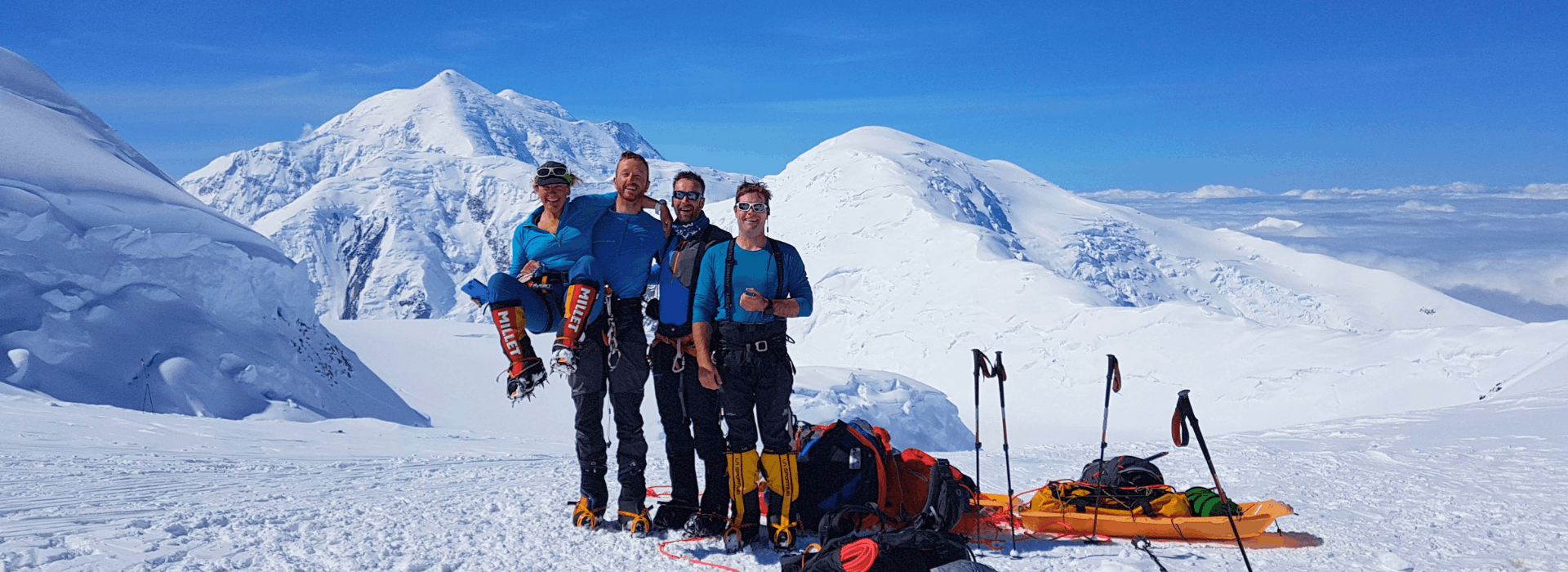
Standing at 6,190m, Denali is the highest mountain in North America and one of the most demanding of the Seven Summits. Unlike many high altitude peaks, it is not defined by technical difficulty or altitude alone. What makes Denali unique is the combination of heavy load carrying, extreme cold, and living on snow and ice for an extended period.
As Ireland’s most trusted expedition company, with over 20 years of experience leading high-altitude expeditions, we are excited to put a team together from Ireland to take on this iconic mountain. Our focus is on proper preparation, ensuring each climber is physically and mentally ready for a long, committing expedition in a remote environment.
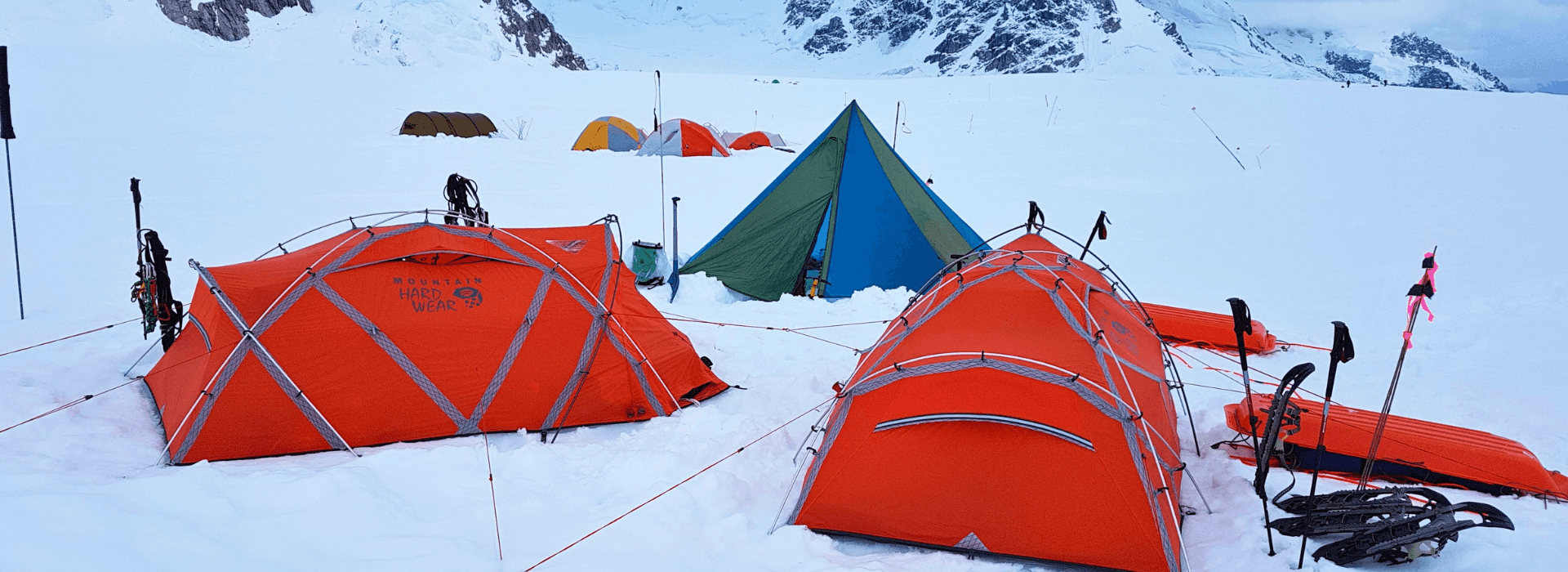
This is about more than reaching the summit. It is about building a strong, well-prepared team of like-minded people who are ready for the realities of Denali. You will be camping on a glacier, moving loads between camps, and operating in a harsh and unpredictable environment. Success comes down to preparation, resilience, and teamwork.
We aim to bring together a team of 6 climbers, with a maximum group size of 8.
Why Climb Denali with Earth’s Edge
We are not just putting a group together. We are building a team.
This expedition is designed for people who want to take on Denali alongside others who share a similar mindset and standards. A team of climbers from Ireland, aligned in preparation and intent, makes a real difference on a mountain like this. There is a shared understanding, a bit of craic when it’s needed, and a strong sense of accountability to each other.
A major part of what we offer happens before you leave Ireland.
You will have direct access to James McManus in the lead-up to the expedition. With first-hand experience on Denali and across a wide range of 7,000m and 8,000m peaks, he will guide your preparation and make sure you are focused on what matters.
We will also run a training hike and team weekend in advance of the trip. This gives you the chance to meet the group, test your systems, and dial in your kit before heading to Alaska.
You will also get priority access to our winter skills courses, where the foundations for Denali are built. Moving efficiently on snow, managing yourself in cold conditions, and being confident with core skills all feed directly into your performance on the mountain.
On the expedition itself, you will be lead by highly experienced team of local guides and working at a 2:1 guide-to-climber ratio, ensuring a safe and well-run climb.
This is a considered approach to Denali, focused on preparation, team, and giving you every opportunity to perform when it matters.
Climbing Denali: The Route to the Summit
Our expedition follows the classic West Buttress route, the most established and least technical route to the summit of Denali.
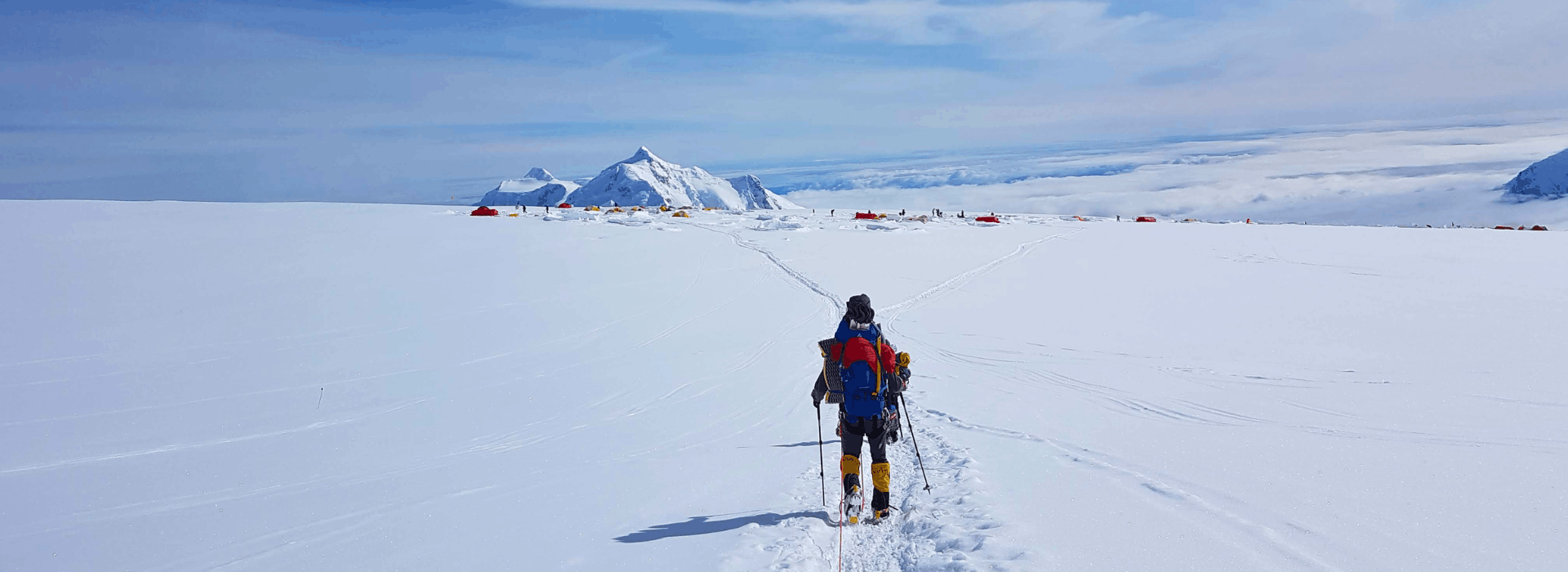
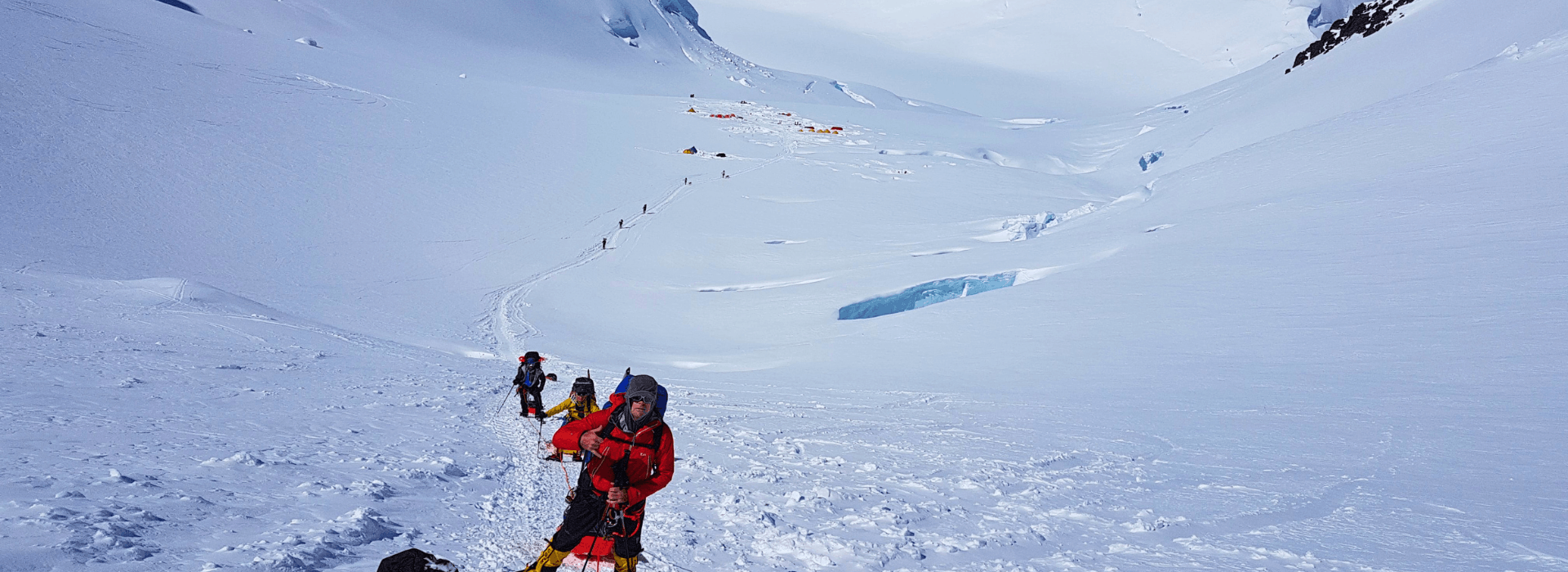
The expedition begins with a ski-equipped plane flight from Talkeetna, landing on the Kahiltna Glacier. From here, you move across a vast glaciated landscape, carrying heavy packs and pulling sleds from the outset.
Climbing is based on a “carry high, sleep low” system. Loads are moved up the mountain and cached before returning to lower camps. This process is repeated as you gradually gain height and establish higher camps.
Higher on the route, fixed lines are used to climb the Headwall, one of the more physically demanding sections. Above this, you reach high camp at approximately 5,200m, where teams move when they are ready to make the summit push.
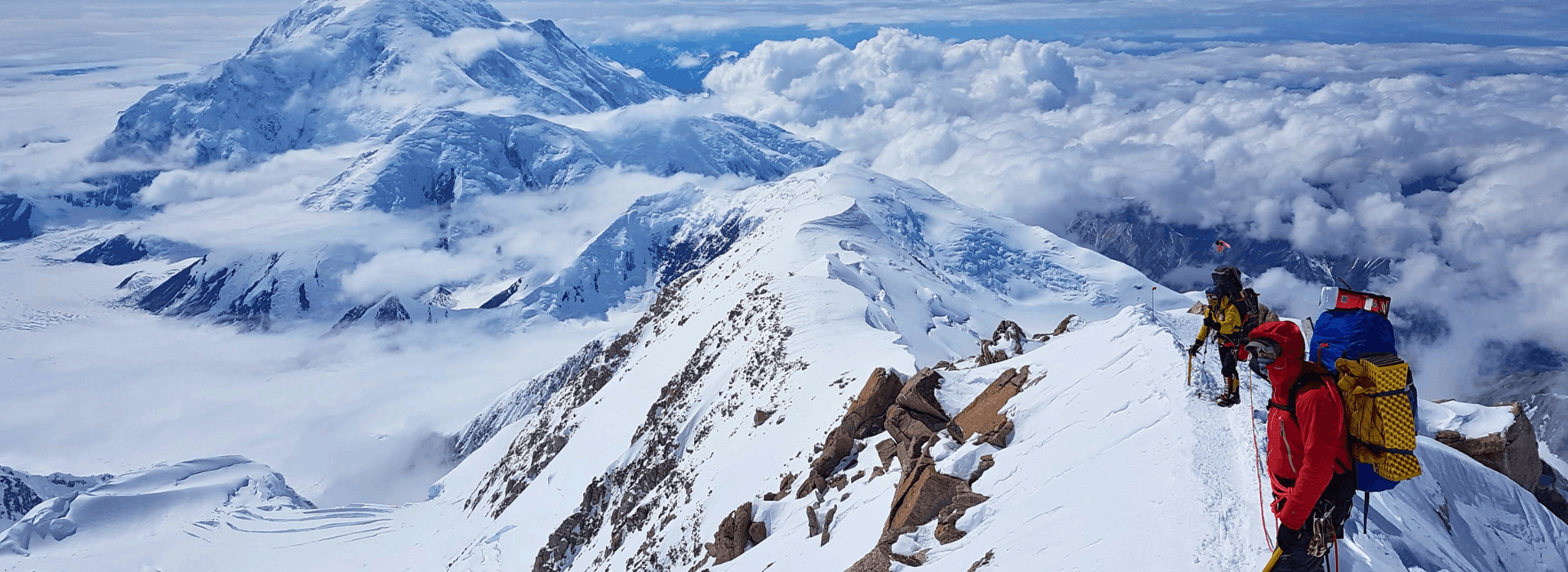
Summit day is long and exposed. You follow the narrow West Buttress ridge, cross the Football Field, and make the final push up Denali Pass to the summit.
Our itinerary is intended as a guideline and may be adjusted depending on weather conditions, snow conditions, and the wellbeing of the team. We have seven spare weather days to maximise your chances of getting a good weather window.
Required Experience
While summit day on Aconcagua is considered harder by some, every other day on Denali is more physically demanding.
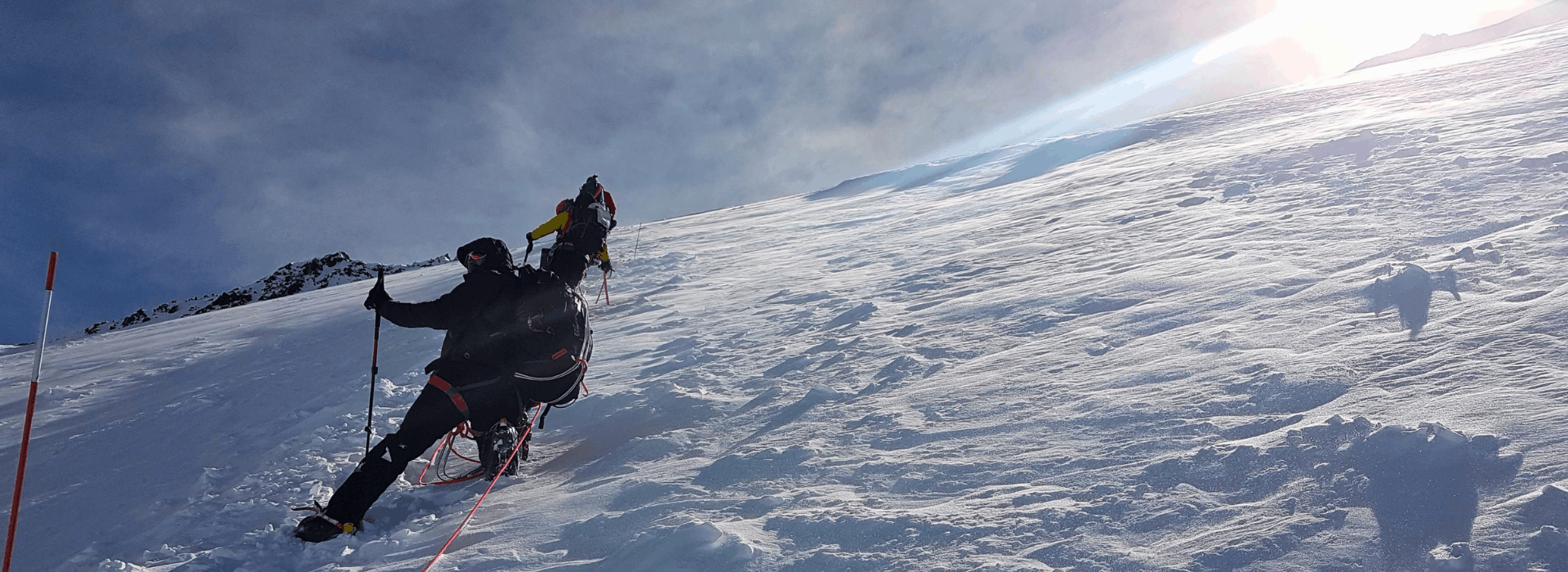
You will be roped together, carrying heavy packs, pulling sleds, and managing yourself in extreme cold over an extended period. This is what makes Denali such a rewarding and respected climb.
The requirements to join our team are as follows:
- Have extensive high mountain experience, including two expeditions to peaks over 6,000m
- Have strong fitness and the ability to perform in a physically demanding environment over an extended period. Between your pack and sled, you will be moving over 35kg at times
- Be comfortable spending extended time camping on snow and ice in a glaciated environment
- Be confident using mountaineering equipment, including crampons, harness, and fixed lines
- Have experience moving efficiently on glaciers and in cold conditions
- Have completed a winter skills course, including cravasse rescue skills, within the previous two years
In the months leading up to the expedition, each climber will receive guidance from James, helping ensure they arrive physically and mentally prepared for the demands of Denali.
If you are unsure whether this is the right next step for you, the Earth’s Edge team will be happy to discuss your experience and advise accordingly.
Denali Expedition Costs & Inclusions
Our Denali expedition is designed to be carefully supported from the moment you sign up to the moment you return home. We focus on preparation, team cohesion, and giving you the best possible chance of success on one of the most demanding mountains in the world.
What’s Included:
Expedition Leadership
- The expedition is led by highly experienced local Denali guides working at a 2:1 guide-to-climber ratio, ensuring a safe and well-run climb.
Preparation Before You Travel
- Personalised training advice from James in the months leading up to the expedition.
- A training day and training weekend in Ireland covering equipment, pacing, and expedition strategy.
- Ongoing pre-departure support and advice from the Earth’s Edge office team.
- An Earth’s Edge team jacket, sent to you ahead of departure as a practical layer for the mountain.
Accommodation, Meals & Logistics
- Two nights’ hotel accommodation in Anchorage in a shared room before your climb.
- Airport transfers in Anchorage provided by the hotel.
- Transfers for any last-minute shopping or gear rental in Anchorage.
- Group transfers between Anchorage and Talkeetna.
- Return flights from Talkeetna and Base Camp on the Kahiltna Glacier.
- Assistance in arranging for post-climb activities in Alaska.
Mountain Infrastructure & Climbing Support
- All food while on the mountain including snacks.
- All group equipment required for the expedition including ropes, sleds, tents, kitchen, snow pickets, shovels, group med kit and a sat phone.
- A carefully selected team of 6–8 climbers to ensure a strong group dynamic.
Responsible & Ethical Travel
- A commitment to responsible travel as a proud Irish B Corp.
Exclusions:
- International Flights
- US visa (ESTA)
- Park fees
- Tips
- Personal expenses and equipment
- Travel insurance
- Meals off the mountain
Payment Information
- Secure your place with a non-refundable and non-transferrable €2,999 deposit. We highly recommend cancellation and curtailment insurance.
- Part payment of €5,000 is due 6 months prior to departure
- The remaining balance is payable by instalments or in full
- All fees are due 90 days prior to departure
Flights to Alaska
We’ll outline a recommended flight itinerary to Anchorage Airport (ANC) in Alaska. This will be shared with you approx. 10 months prior to departure and once your booking is confirmed.
You are free to book any flights of your choosing, provided you are in time for the expedition briefing at 10 a.m on Day 2.
We always recommend booking a flexible ticket as it is highly likely you will change the return date of your flight.
Itinerary
Day 1
Arrive in Anchorage
↓
Arrival in Anchorage. After transferring to the hotel, the team has time to rest, organise equipment and prepare for the expedition ahead. Overnight hotel.
Day 2
Preparation Day in Anchorage
↓
A full day dedicated to expedition preparation. After a full expedition brief in the morning, we carry out a comprehensive gear check, organise food and equipment. Overnight hotel
Day 3
Fly to Kahiltna Glacier Base Camp (2,200m)
↓
In the morning we transfer to Talkeetna and then take a spectacular flight takes onto the Kahiltna Glacier. We establish Base Camp and begin preparing for the climb.
Day 4
Basecamp to Camp 1 (2,380m)
↓
We begin our expedition, travelling up the Kahiltna Glacier. Moving on snowshoes while hauling sleds, we make our way to Camp 1.
Day 5
Carry to Cache (3,050m)
↓
We carry supplies partway up the route, caching equipment before returning to Camp 1. This ‘carry high, sleep low’ strategy supports acclimatisation.
Day 6
Move to Camp 2 (3,400m)
↓
We pack up Camp 1 and move higher up the glacier to Camp 2, continuing to build acclimatisation and efficiency with sled travel.
Day 9
Move to Camp 3 (4,300m)
↓
A tough today as we move up to Basin camp. One of the longer days on the approach.
Day 10
Active Rest Day
↓
Another easier day where we move back down and collect the cache from Day 9.
Day 11
Carry to Cache (4,800m)
↓
We carry equipment up the headwall and cache it on ridge above camp. We then return to Camp 3.
Day 15
Summit Day (6,190m)
↓
A long 9 to 12 hour day to reach North America's highest point. After summit we return to high camp for the night.
Day 18-24
Spare Weather Days
↓
Extra days are built into the itinerary to allow flexibility for weather conditions and summit opportunities.
Day 25
Depart Alaska
↓
We will provide transportation back to Anchorage for your flight home. Accommodation after the climb is not included as you may not need it. Assistance will be provided locally to help you book accommodation if you need it.
Start Planning Your Journey
Facts
About Denali
Denali is the highest mountain in North America, standing at 6,190m, and is widely regarded as one of the most demanding of the Seven Summits. Unlike many high altitude peaks, Denali’s challenge comes not just from its elevation, but from the combination of extreme cold, heavy load carrying, and the physical demands of moving across a vast glaciated landscape.
The first recorded ascent of Denali was made in 1913 by Hudson Stuck, Harry Karstens, Walter Harper, and Robert Tatum via the South Summit. Earlier attempts had taken place in the years prior, including Frederick Cook’s disputed claim in 1906. Since then, Denali has become a proving ground for mountaineers, respected for the seriousness of its environment and the commitment required to climb it.
Denali is often considered colder than peaks of similar height due to its high latitude and exposure. Temperatures can drop below -30°C, with severe wind chill making conditions significantly harsher. The mountain also requires climbers to carry and haul all of their equipment, adding a level of physical effort not found on many other high altitude expeditions.
Best time to climb Denali
The climbing season on Denali runs from mid-May to early July. This period offers the most stable weather conditions and sufficient daylight for safe travel on the glacier. Despite this, storms and delays are common, and teams should be prepared for periods of waiting at camp.
Temperatures on the expedition can vary significantly depending on altitude and weather. Lower on the mountain, daytime temperatures may feel relatively mild in the sun, while higher camps are consistently cold, with nighttime temperatures regularly dropping below -20°C. Wind and exposure are constant factors, particularly on the upper mountain.
What do you need to climb Denali
Climbing Denali requires a full set of high altitude and cold weather mountaineering equipment. This includes technical clothing for extreme conditions, glacier travel gear, and equipment suitable for hauling loads on sleds. A detailed equipment list is provided to all climbers in advance of the expedition.
How to prepare to climb Denali
We classify Denali as a level 8 expedition that requires a strong level of fitness, previous high altitude experience, and confidence operating in cold, glaciated environments. You should be comfortable carrying heavy loads over multiple days and living in expedition conditions for an extended period. Preparation focuses on physical conditioning, technical skills, and the ability to operate effectively as part of a team in a remote and challenging environment.
Our Guiding Partners
For our Denali expedition, we work with one of the most experienced and respected guiding companies operating on the mountain. Mountain Trip have a long track record of running safe, well-organised expeditions on Denali, with highly experienced guides and strong systems in place. Their approach aligns closely with our own, with a clear focus on preparation, professionalism, and giving each climber the best possible chance of success.
By combining their on-the-ground expertise with our pre-expedition support and team structure, we are able to offer a well-rounded and carefully considered approach to climbing Denali.
 Certified B-Corp
 Certified B-Corp
Earth's Edge is a certified B-Corp. In fact, we are the highest scoring B-Corp in Ireland. We are passionate about sustainable travel, bettering the lives of the people connected with the company and minimising our environmental impact.